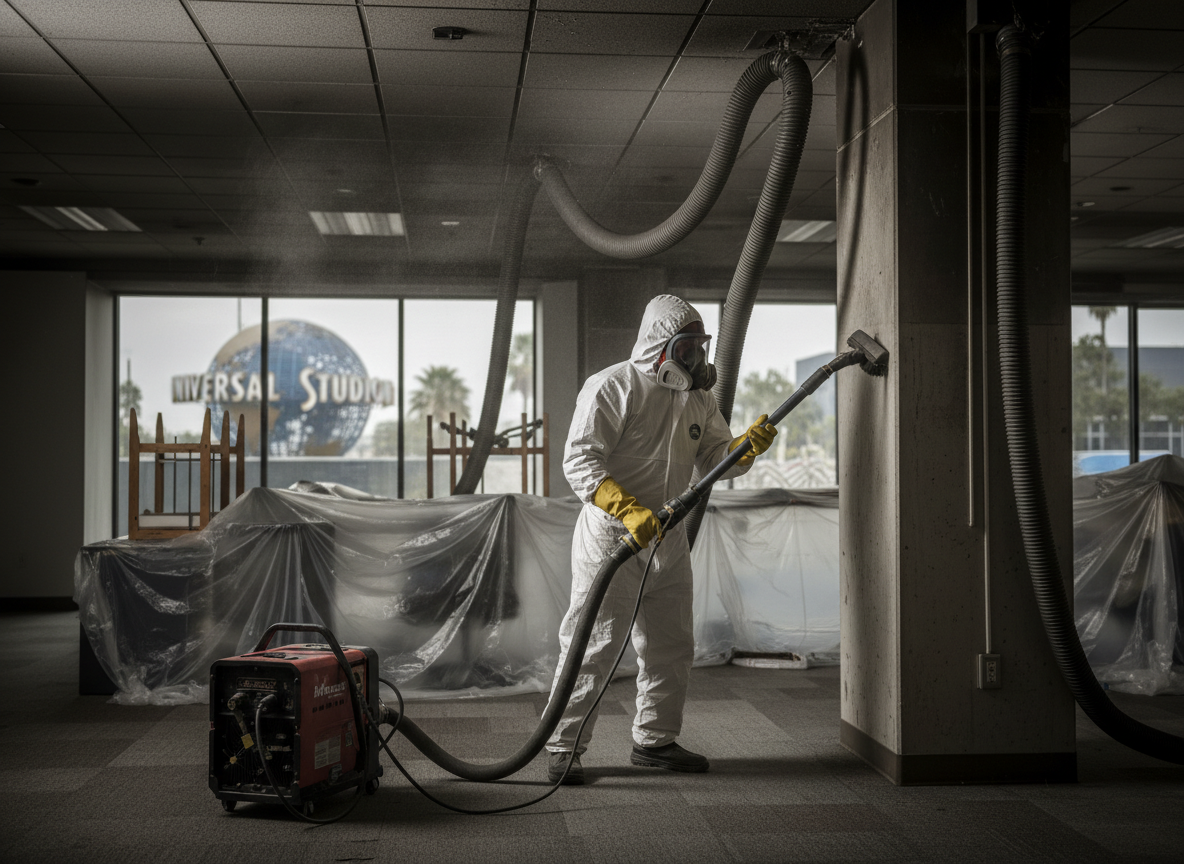
Smoke from structure fires in Universal City penetrates porous materials like drywall, insulation, and wood framing common in Los Angeles County housing stock built before the 1980s. Residues settle into HVAC ducts and attic spaces, where the area's Mediterranean climate with mild winters keeps humidity levels steady enough to prevent natural drying and allow odors to re-emerge weeks later. Technicians must test for pH levels on surfaces and use specialized alkaline cleaners rather than standard detergents to neutralize acidic soot without damaging finishes.
Edge cases include smoke migration through shared walls in hillside properties near Universal Studios Hollywood, where terrain funnels airflow and carries particles into neighboring units. In these situations containment barriers and negative air machines become essential to prevent cross-contamination during remediation. Code requirements in Los Angeles County also mandate proper disposal of contaminated materials and documentation of cleaning methods when insurance claims are involved.
Homeowners often overlook hidden reservoirs in electrical boxes and behind baseboards, where smoke can corrode wiring over time if not addressed. A full remediation includes disassembly of affected fixtures, HEPA vacuuming, and thermal fogging or hydroxyl treatment to reach microscopic particles. Mild winter temperatures mean crews can work without weather delays, but they must still account for reduced natural ventilation in tightly sealed modern remodels common around Universal City Plaza.
Technician insight
In Universal City the thing that catches most people out with smoke remediation is how the mild winters keep humidity steady in pre-1980s homes near Universal Studios Hollywood, letting smoke odors hide in HVAC ducts and reappear once the system runs again. Homeowners usually stop at surface wiping and miss the duct cleaning step that actually stops the smell from returning.
Lingering Odor After Kitchen Fire
A homeowner in a 1970s single-family house two blocks from Universal City Plaza reported smoke smell returning days after a small kitchen fire. Inspection found heavy soot inside the main duct run and attic insulation. Crews contained the space, cleaned all accessible surfaces, replaced insulation, and ran hydroxyl treatment through the HVAC for 48 hours. The odor did not return after the system was restarted.
How it works
- 1
Initial Assessment
Technicians inspect all affected rooms, test surfaces for soot pH, and map smoke travel paths through the property's HVAC and attic spaces.
- 2
Containment Setup
Plastic barriers and negative air pressure isolate the work zone to stop particles from spreading to unaffected areas of the home.
- 3
Surface Cleaning
HEPA vacuums and alkaline solutions remove residues from walls, ceilings, and contents without spreading soot.
- 4
Odor Neutralization
Ozone or hydroxyl generators treat remaining microscopic particles in ducts, insulation, and porous materials.
- 5
Final Verification
Air quality testing and visual inspection confirm odors and residues are eliminated before reassembly.
Pricing
Cost depends on square footage affected, depth of smoke penetration into HVAC and insulation, and whether contents require separate treatment; upfront quotes provided after inspection.