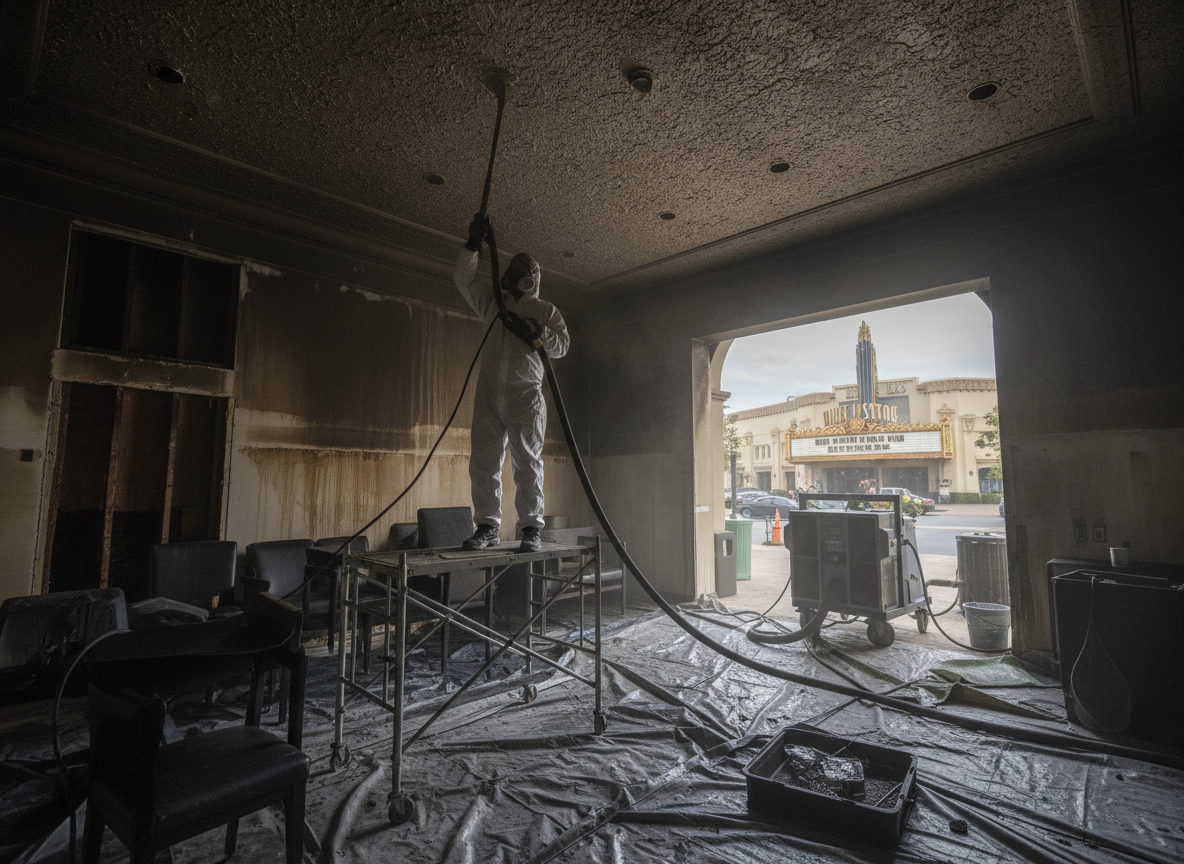
Smoke damage in Universal City homes often penetrates porous materials like drywall, insulation, and hardwood floors common in the area's post-1960s housing stock near Universal Studios Hollywood. Mediterranean climate conditions with mild winters mean smoke odors linger longer indoors without the flushing effect of heavy rain or freezing temperatures. Restoration crews must address both visible soot on surfaces and invisible residues that embed in HVAC systems and attic spaces typical of hillside properties in Los Angeles County.
Technicians begin by identifying smoke migration paths through shared walls and ventilation ducts, which are frequent in the compact residential layouts around Universal City Plaza. Proper containment prevents cross-contamination to unaffected rooms, a critical step when working near commercial zones tied to the studio complex. Specialized equipment captures fine particulate from textured ceilings and cabinetry, materials that trap residues more stubbornly than modern finishes.
Odor neutralization requires thermal fogging or ozone treatments calibrated for the dry air prevalent in the region, avoiding moisture introduction that could lead to secondary mold issues during the mild winter months. Contents cleaning focuses on porous items like upholstery and books that absorb smoke, with documentation provided for insurance adjusters handling claims from both structure fires and regional wildfire events.
Seasonal Considerations
Mild winters in Los Angeles County reduce natural ventilation opportunities, requiring extended air scrubbing runs after smoke events to fully clear residues from older stucco and plaster interiors common throughout Universal City.
Technician insight
In Universal City, the thing that catches most people out with smoke damage restoration is how quickly residues travel through the shared attic spaces and hillside ventilation in homes built near Universal Studios Hollywood. The dry Mediterranean climate lets fine soot embed deeper into plaster and wood without the moisture that might otherwise surface it quickly.
Kitchen Fire Smoke in a Universal City Home
A kitchen grease fire sent smoke through the HVAC and into bedrooms of a 1970s home near Universal City Plaza. We traced migration into the attic insulation and closet walls, then performed targeted soot removal and ozone treatment. The property passed air quality checks within four days and avoided full gutting of the affected rooms.
How it works
- 1
Initial Assessment
Inspect all affected rooms, HVAC pathways, and attic spaces to map smoke migration.
- 2
Containment Setup
Seal off impacted zones to prevent soot spread to unaffected areas of the home.
- 3
Soot Removal
Clean surfaces, ducts, and contents using HEPA filtration and appropriate solvents.
- 4
Odor Neutralization
Apply thermal fogging or ozone treatments followed by air scrubbing.
- 5
Final Verification
Test air quality and surfaces before returning the property to the owner.
Pricing
Costs depend on square footage affected, smoke type, and whether HVAC or contents require specialized handling.