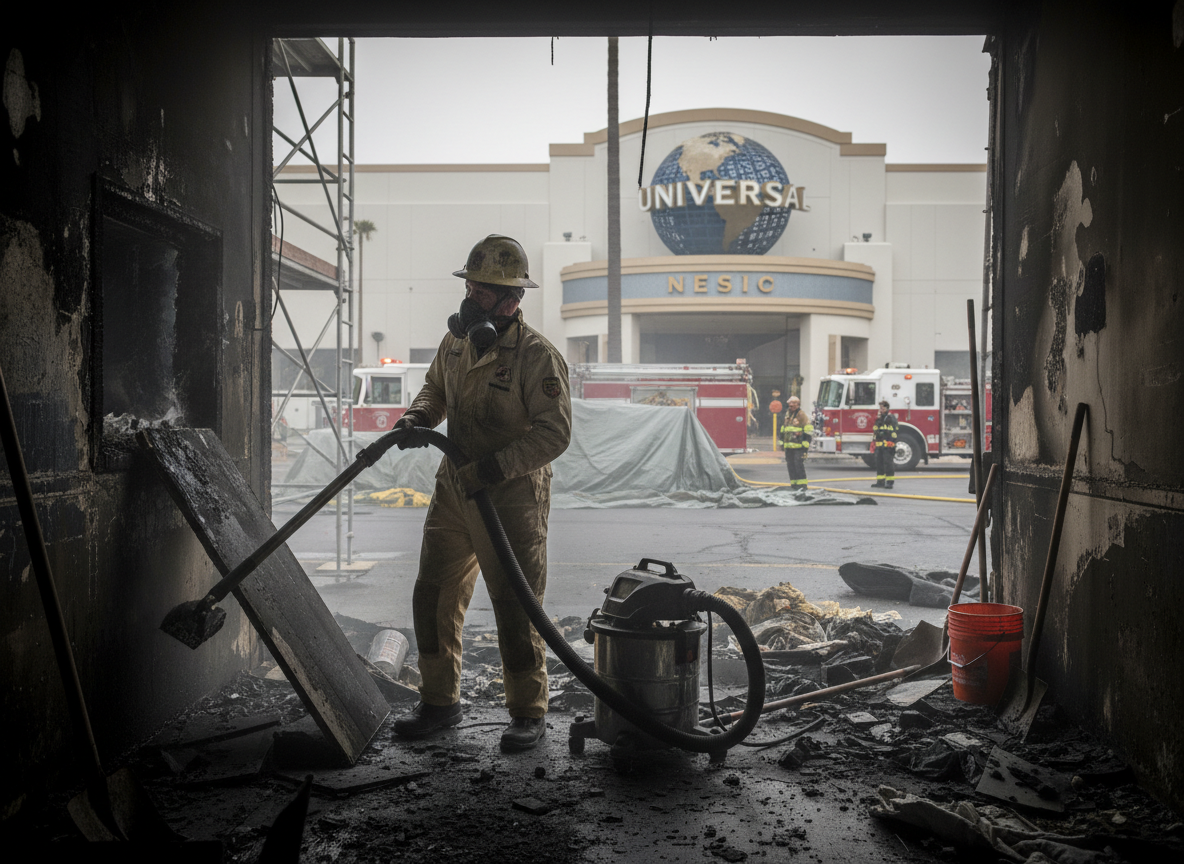
Fires in Universal City often start in kitchens or electrical systems of the 1960s-era apartments clustered around Universal City Plaza. Mediterranean climate keeps winters mild but leaves summers bone-dry, so soot bonds tightly to drywall and HVAC ducts before crews arrive. Restoration crews must isolate affected units quickly because smoke migrates through shared walls and attic spaces common in Los Angeles County multifamily buildings near Universal Studios Hollywood.
After initial safety checks, technicians map odor pathways using thermal imaging because older stucco exteriors hide hidden charring behind lath and plaster. Containment barriers and negative-air machines prevent cross-contamination into unaffected units, a step that matters when properties sit on the sloped terrain east of the 101 freeway. HEPA filtration and specialized degreasers remove oily residues that standard cleaners leave behind on concrete slabs and tile surfaces.
Final clearance testing confirms airborne particulates meet Los Angeles County standards before residents return. Crews document every layer removed so insurance adjusters see exactly which surfaces were impacted by the fire event rather than prior wear. Work continues around the clock from the 100 Universal City Plaza base to limit secondary water damage once suppression systems activate.
Technician insight
In Universal City, the thing that catches most people out with Emergency fire damage restoration is how fast smoke travels through the shared attics and thin plaster walls of 1960s apartments clustered near Universal Studios Hollywood, especially once the dry season hits before our mild winters arrive.
Electrical fire in a Universal City apartment
A kitchen outlet short sparked at night in a two-story building off Universal City Plaza. Smoke traveled upward through the attic and into three neighboring units before the fire department arrived. Crews sealed the attic, cleaned soot from ducts and ceilings, dried water from suppression efforts, and restored the affected apartments within five days.
How it works
- 1
Safety and Assessment
Technicians arrive within the hour, verify structural stability, and document all affected rooms with photos and moisture readings.
- 2
Containment and Ventilation
Plastic barriers and negative-air units isolate the fire zone to stop smoke migration through shared hallways and attic spaces typical in Universal City buildings.
- 3
Soot and Residue Removal
HEPA vacuums and degreasing agents clean surfaces, ducts, and contents while crews monitor for hidden char in older plaster and stucco assemblies.
- 4
Drying and Restoration
Dehumidifiers and air movers dry any water introduced during suppression, followed by repairs to drywall, flooring, and trim to pre-loss condition.
Pricing
Upfront quotes provided after on-site assessment; final cost depends on square footage affected, smoke penetration depth, and whether contents require separate cleaning.