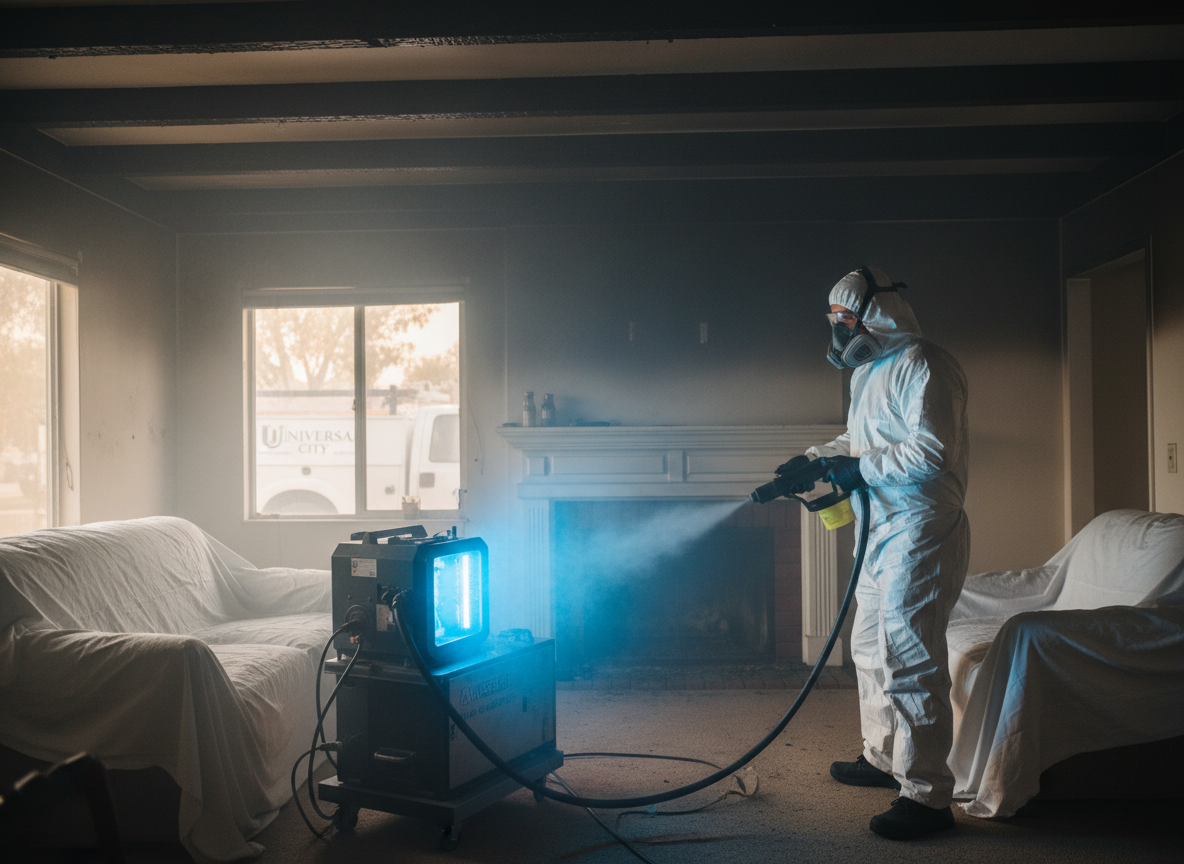
Smoke from structure fires penetrates porous materials like drywall, insulation, and wood framing common in Universal City's older hillside homes built before modern fire codes. In Los Angeles County's Mediterranean climate, mild winters reduce natural ventilation, allowing odors to linger in attics and wall cavities for months if not addressed with thermal fogging and hydroxyl generators rather than simple air fresheners.
Homes near Universal Studios Hollywood often feature stucco exteriors and tight crawl spaces that trap soot particles carried by Santa Ana wind patterns. Effective removal requires sealing off HVAC systems first to prevent redistribution, followed by repeated ozone treatments and HEPA vacuuming of contents, because incomplete neutralization leads to recurring smells when humidity rises even slightly.
Edge cases include properties where fire damage reached shared walls in multi-unit buildings along Universal City Plaza, demanding coordination with neighbors to avoid odor migration. Technicians must also account for soil conditions on sloped terrain that can wick moisture into foundations, reactivating embedded smoke compounds long after initial cleaning.
Code considerations in Los Angeles County require proper disposal of contaminated porous materials before deodorization begins, and skipping this step often voids insurance coverage for secondary odor claims.
Technician insight
In Universal City, the thing that catches most people out with Odor removal after fire is how the older stucco homes on sloped lots near Universal Studios Hollywood trap smoke in attic spaces that never fully air out during our mild winters, so homeowners think the smell is gone until the first rain reactivates it.
Hillside Home Near Universal Studios
Smoke from a kitchen fire had traveled through shared attic spaces into bedrooms. Inspection revealed soot embedded in insulation and HVAC returns. We removed affected materials, ran multiple hydroxyl cycles over three days, and sealed all porous surfaces. The family returned without any lingering odor even after the next rain.
How it works
- 1
Initial Inspection
Technicians walk the property to map smoke paths through Universal City homes, checking attics, HVAC ducts, and wall voids for hidden residue.
- 2
Source Removal
All charred and heavily contaminated materials are removed and disposed of according to local regulations before any deodorizing begins.
- 3
Air Scrubbing and Sealing
HEPA air scrubbers and hydroxyl machines run continuously while surfaces receive specialized sealants to lock in remaining odors.
- 4
Final Verification
Odor testing with equipment confirms clearance, followed by a walkthrough with the homeowner to ensure no traces remain.
Pricing
Pricing depends on square footage, smoke migration depth, and number of treatment cycles required after inspection.