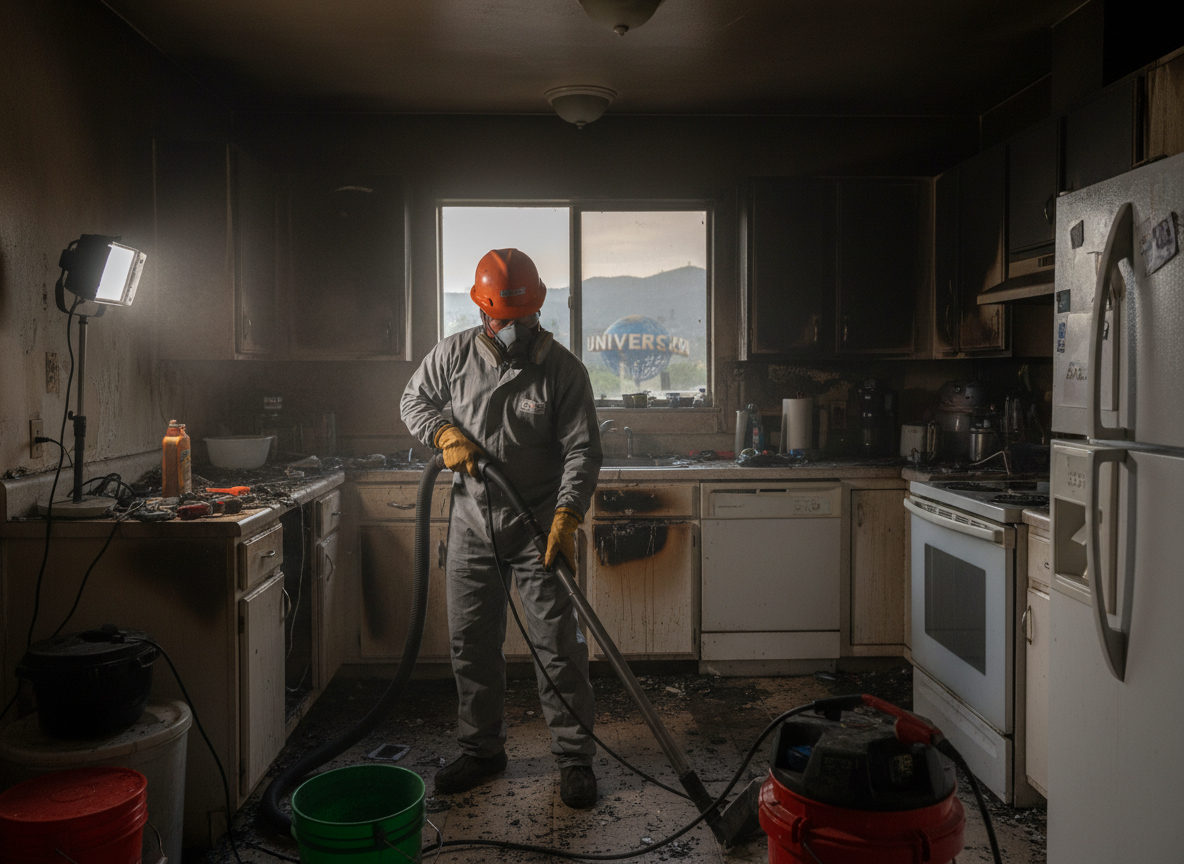
Universal City sits in Los Angeles County with a Mediterranean climate that brings dry summers and heightened wildfire smoke exposure even from distant events. Older housing stock near Universal Studios Hollywood often features lath-and-plaster walls and original HVAC systems that trap fine soot particles, requiring specialized negative-air filtration and HEPA vacuuming before any sealing. Mild winter humidity can then lock residues into porous materials if drying is delayed, turning cosmetic staining into permanent odor issues that standard cleaning misses.
Restoration work here frequently involves coordinating with Los Angeles County permitting when structural members are compromised, especially in hillside homes where soil movement after water application for suppression adds complexity. Technicians must test for hidden char in attics and crawl spaces common to the area's ranch-style and mid-century builds, as missed pockets release odors later. Proximity to the studio lots also means crews navigate tight access roads and occasional production-related traffic that extends response times during peak hours.
Edge cases include secondary water damage from sprinkler activation in commercial-adjacent residences, where gypsum board delamination occurs faster due to the region's low annual rainfall leaving materials less acclimated to moisture. Proper documentation of pre-existing conditions in these older properties prevents disputes, and all work follows local building codes for ventilation restoration to avoid code violations during reinspection.
Technician insight
In Universal City, the thing that catches most people out with Fire damage restoration near me is how the older plaster-and-lath construction around Universal Studios Hollywood holds smoke deep in the walls, and the mild winter humidity then sets it before crews can reach every cavity.
Soot in HVAC After Nearby Structure Fire
A neighbor's garage fire sent smoke into an adjacent Universal City home through shared attic space. Inspection found heavy soot coating inside the ductwork and on plaster walls. Crews performed negative-air cleaning, replaced contaminated filters, and dried residual moisture from suppression efforts. The home passed air-quality testing and was returned to full use without lingering odors.
How it works
- 1
Initial Assessment
Technicians arrive within hours to document visible char, smoke patterns, and affected systems while testing air quality and hidden moisture.
- 2
Containment and Safety
Plastic barriers and negative air machines isolate work zones to prevent soot spread into unaffected rooms and HVAC.
- 3
Cleaning and Odor Removal
HEPA filtration, chemical sponges, and thermal fogging address residues on surfaces, ducts, and contents before any reconstruction.
- 4
Drying and Monitoring
Industrial dehumidifiers and air movers address water from suppression, with daily moisture readings until levels stabilize.
- 5
Restoration and Final Walkthrough
Repairs to drywall, flooring, and finishes are completed, followed by a joint inspection confirming all odors and residues are resolved.
Pricing
Upfront estimates provided after inspection; final cost depends on square footage affected, materials involved, and any hidden damage discovered during cleaning.