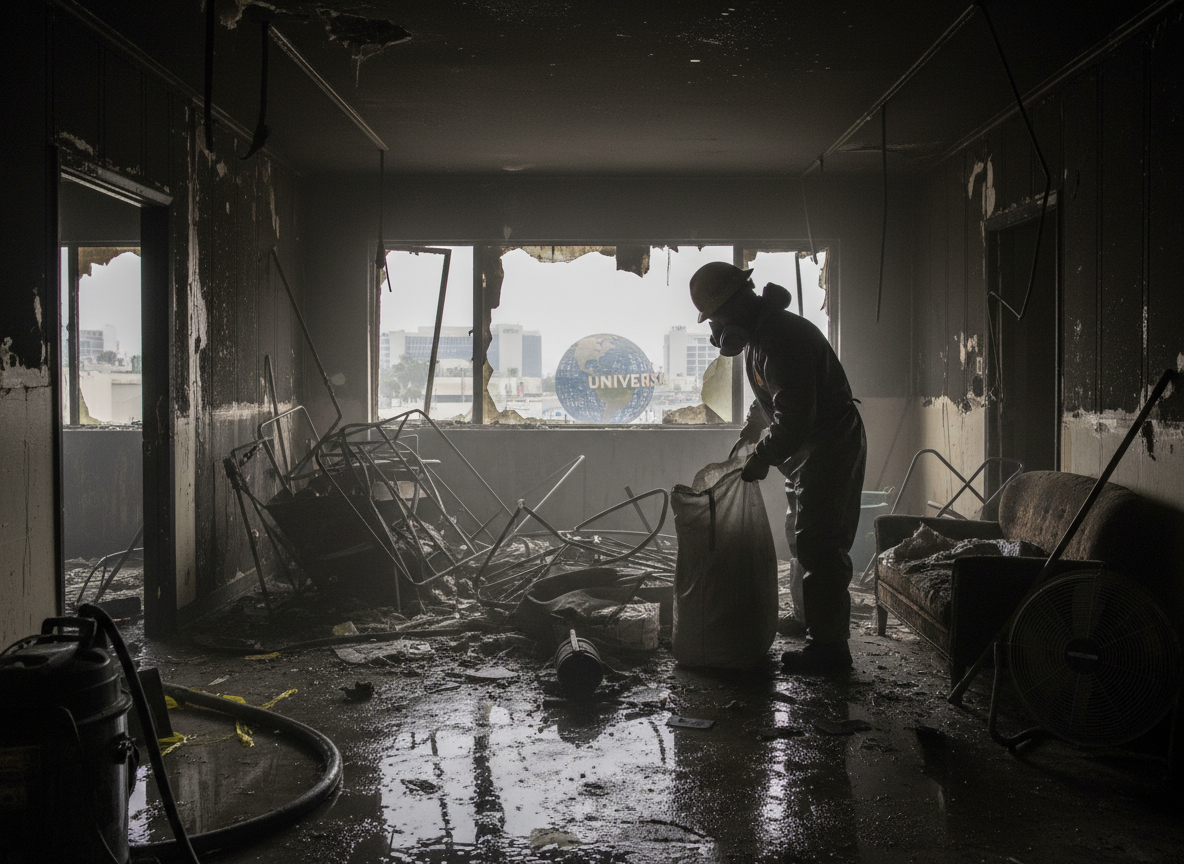
Apartment fires in Universal City often involve older multi-story buildings clustered near Universal Studios Hollywood where shared walls and HVAC systems allow smoke and soot to travel between units quickly. Mediterranean climate conditions with dry air can leave residue more stubborn on surfaces like drywall and cabinetry common in Los Angeles County apartments. Technicians must isolate affected units while protecting neighboring residents from cross-contamination during the initial assessment.
Cleanup crews focus on porous materials such as carpet padding, insulation and upholstered furniture that trap odors in the mild winter temperatures typical here. In buildings close to the studio lots, older electrical systems increase the chance of hidden charring behind walls that requires infrared scanning before demolition begins. Proper disposal of contaminated debris follows Los Angeles County regulations to avoid secondary issues in the dense urban setting.
Handling Shared Building Systems
Apartment complexes near Universal City Plaza frequently share ventilation shafts that spread smoke odor to unaffected floors. Crews seal these pathways first and use air scrubbers calibrated for the local humidity levels to prevent re-soiling during the drying phase. This step protects the entire building rather than treating only the fire unit.
Post-Cleanup Verification
Final clearance testing checks for residual VOCs on surfaces after soot removal in Universal City apartments. Technicians document each step for insurance adjusters familiar with Los Angeles County multi-family claims, ensuring residents can return without lingering health concerns from incomplete odor neutralization.
Technician insight
In Universal City, the thing that catches most people out with Apartment fire cleanup is how quickly smoke travels through the older shared HVAC runs in buildings around Universal Studios Hollywood. The mild winters keep humidity low so soot stays dry and clings to textured ceilings longer than owners expect, turning a single-unit job into a multi-floor project if containment is skipped.
Studio-adjacent apartment fire
Smoke from a kitchen fire on the third floor migrated through a shared duct into two lower units near Universal Studios Hollywood. We found hidden soot behind baseboards and in the building's return air system. Containment barriers and targeted duct cleaning prevented further spread, allowing all three units to pass clearance testing within five days.
How it works
- 1
Initial Assessment
Inspect all units connected by HVAC and shared walls to map smoke migration paths in the building.
- 2
Containment Setup
Install barriers and negative air machines to isolate the affected apartment from neighboring units.
- 3
Soot and Debris Removal
Remove charred materials and clean non-porous surfaces using methods suited to Los Angeles County building codes.
- 4
Odor Neutralization
Apply thermal fogging and ozone treatment calibrated for the dry Mediterranean air conditions.
- 5
Final Clearance
Conduct air quality testing and document results before releasing the unit back to residents.
Pricing
Cost depends on the number of affected units, depth of smoke penetration and whether contents require separate handling.