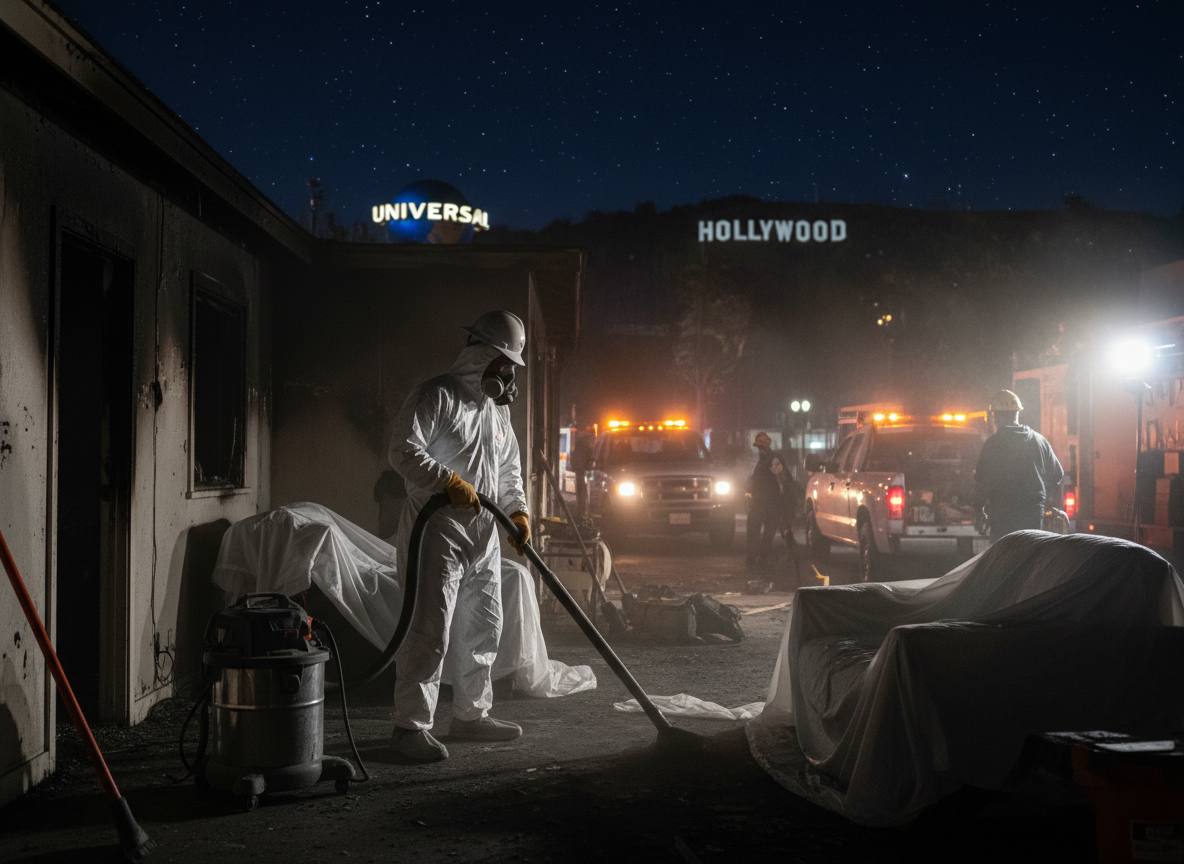
Fires in Universal City often start in kitchens or electrical systems of mid-century stucco homes built into the hillsides around Universal Studios Hollywood. Smoke travels quickly through older ductwork and attic spaces common in Los Angeles County, settling into porous materials like plaster and insulation. A 24 hour fire restoration response must account for the mild winters that limit natural airflow, allowing odors to linger longer than in drier inland areas.
Cleanup crews face unique challenges when embers land on dry brush near the 101 corridor or when water used to extinguish flames runs down sloped lots and pools against foundations. Soot removal requires different techniques on the textured exteriors typical here versus smooth drywall interiors. Delaying extraction can lead to corrosion on metal fixtures and HVAC components that homeowners rarely inspect until odors return.
Restoration teams prioritize containment first to protect neighboring properties in dense Universal City blocks, then move to air scrubbing and thermal fogging suited to the region's low-humidity conditions. Edge cases include hidden charring behind built-in cabinetry or under tile roofs that trap heat longer than expected. Proper sequencing prevents secondary issues like mold that can appear weeks later when winter rains finally arrive.
Technician insight
In Universal City, the thing that catches most people out with 24 hour fire restoration is how the mild winters and hillside terrain let smoke settle deeper into older stucco homes near Universal Studios Hollywood. Homeowners often miss that water from suppression can pool against foundations on sloped lots and create hidden moisture problems weeks later.
Kitchen Fire Smoke Migration
A small kitchen fire in a 1960s Universal City home sent smoke through shared attic spaces into bedrooms. We found soot lodged in the original plaster and HVAC ducts. After containment and targeted cleaning we restored the home without full gutting and returned the family within five days.
How it works
- 1
Immediate Site Assessment
Arrive within hours, secure the property, and document visible char, smoke paths, and water intrusion from suppression efforts.
- 2
Containment and Safety Setup
Isolate affected zones, install negative air machines, and remove hazards before deeper cleaning begins.
- 3
Soot and Odor Removal
Apply specialized cleaning agents to surfaces and use thermal fogging to neutralize smoke embedded in porous materials.
- 4
Drying and Final Verification
Monitor moisture levels in walls and attics, then conduct clearance testing to confirm no lingering odors remain.
Pricing
Costs depend on square footage affected, smoke migration depth, and whether structural repairs are needed; we provide upfront written estimates after inspection.